 Street food
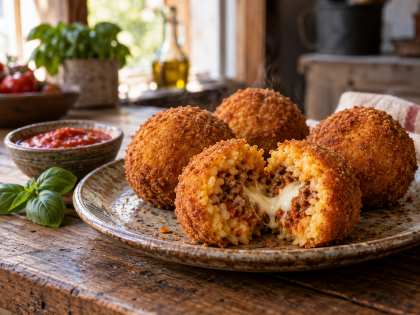
Arancine
Saffron rice, ragù at the heart, a crust that cracks. The starter that gets everyone's attention.
Page 24 in the book35 authentic Sicilian recipes · instant cookbook
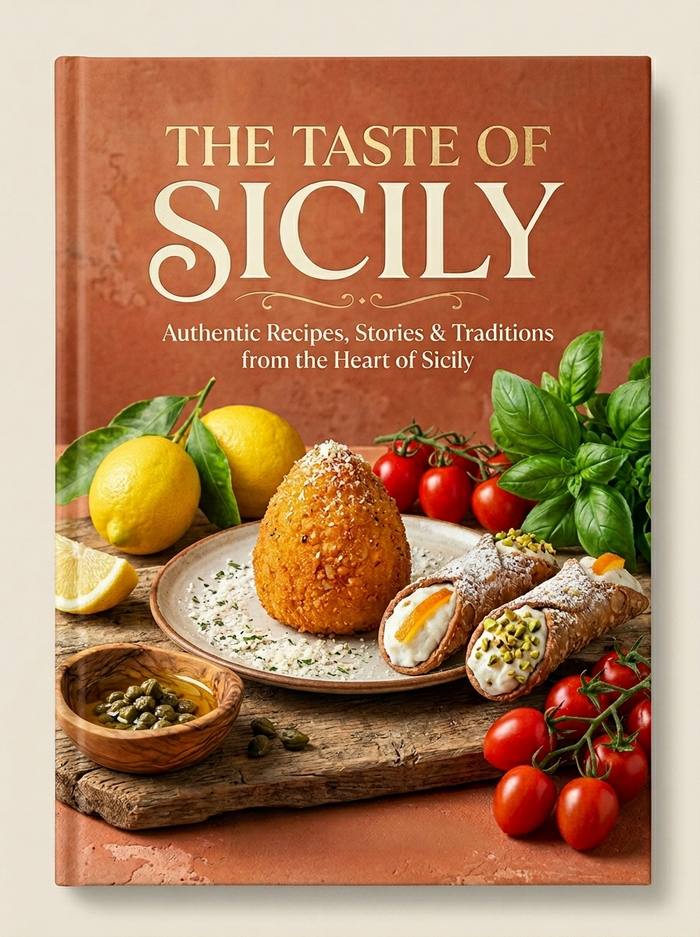
Recipes passed down through nine generations of my family, cooked in the hills above Cefalù, with the story behind every dish to tell at the table.
Everyone can make dinner. Not everyone can make the dinner people remember.
A peek inside the book
Real pages, exactly as you'll get them: the story behind each dish to tell at the table, where Sicilians eat it, and every step, written for a home kitchen.
Tap a page to enlarge it
You know the menu by heart, which is the problem. The lasagna, the roast chicken, the salad from the bag. It's fine. It's always fine. And by the time the dishes are done, nobody could tell you what they ate.
Then one night, in a restaurant, someone puts down a plate of caponata — sweet and sharp at the same time, the eggplant collapsed into something you can't name — and the whole table goes quiet. You think: why can't I serve this? You find a recipe online. You follow it. It tastes like tomato and vinegar in the same pan. Fine again.
The recipe wasn't wrong. It was copied from a recipe that was copied from a recipe, each one a little flatter, until the thing that made it Sicilian was gone — and nobody in that chain had ever stood in a Sicilian kitchen.
The dish that makes a table go quiet was never on a blog. It was in someone's grandmother's hands.
What it actually costs to keep hosting this way
Guests arrive at seven, leave at ten, and by Monday the meal is gone from everyone's memory. Not one of those dinners was bad. Not one was the dinner anyone brings up a month later, either.
Forty dollars a head for the one Sicilian dish your friends rave about. You've taken them there eleven times. You still can't serve it at home — and the restaurant isn't going to tell you how.
Another blog, another life story above the ingredients, another version flattened for everyone. You've made caponata four times from four sites. Not once did a guest ask for the recipe.
None of this is dramatic. It's just a table that could be the best night of the month, and isn't.
You don't need more recipes. You need the ones that were never written for a blog in the first place.
If any of these is you
None of this means you need cooking school. It means the recipes you've been given were missing what can't be copied from a website: the person who cooked them for real people, every week, for decades — and the stories that make a dish worth talking about.
So why does Nonna's caponata get a reaction no recipe online ever does? There's a reason, and it isn't talent.
The reason, in one line
A recipe copied from a website loses the why. A recipe cooked in the same kitchen for nine generations never had to write the why down — it was in the hands. This book is the first time it's on paper.
Arab rule brought saffron, citrus, almonds and sugar to the island in the ninth century. That's why arancine are built on saffron rice and caponata is sweet and sour at once. Nonna never read that in a book — she just did it the way her mother did. It's also the story your guests will want to hear while they eat.
Every caponata recipe online tells you tomato, vinegar, sugar. Clear steps and tasting cues help you balance caponata's sweet-and-sour flavour, the way Nonna explained it when I asked her, twice, and wrote down the answer.
She cooked for eleven people on a farm stove. Most of what she used is in an ordinary supermarket. Where a recipe needs a specialty shop, it says so, with the substitution she'd have used written beside it.
That restaurant caponata your friends rave about? Page 46. This time you're the one serving it — and you'll know why the eggplant tastes like that.
What you're buying isn't a recipe count. It's the dishes, the reason each one works, and the story to tell when someone asks — the part nobody had ever put in writing.
Your next dinner party, three weeks from now
The book is propped against the fruit bowl, already splattered from the practice run on Sunday. Tonight it's arancine to start: saffron rice, a spoon of ragù at the center, then into the oil. The crust cracks. Steam comes out. The table goes quiet. Then caponata, then cannoli you filled five minutes ago.
"Wait — did you make this, or did you fly somewhere?"
It won't happen with every recipe on the first try, and I won't pretend it will. But the first time it does, you'll know exactly why — and you'll already be planning the next dinner.
Here's what's in the book, dish by dish.

What you get
Organized the way Sicilians eat, so you can build a whole menu: street food to start, a first course, a main, and the sweets to finish. Every recipe with the why beside the what. Every one tested in a kitchen in Ohio before it went in.
From Nonna's table
The ones guests ask about first.
Street foodSaffron rice, ragù at the heart, a crust that cracks. The starter that gets everyone's attention.
Page 24 in the book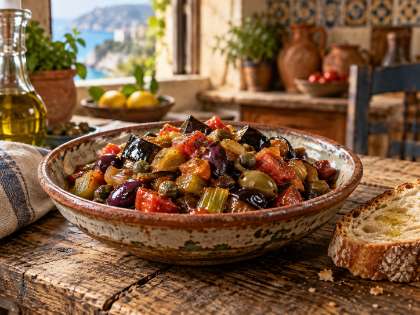 Street food
Sweet and sharp in the same bite. The balance that takes three tries — with the two tries skipped.
Page 46 in the book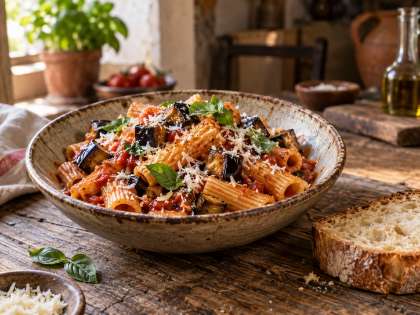 First courses
Fried eggplant, tomato, salted ricotta. Made the way Catania makes it, not the way a blog does.
Page 68 in the book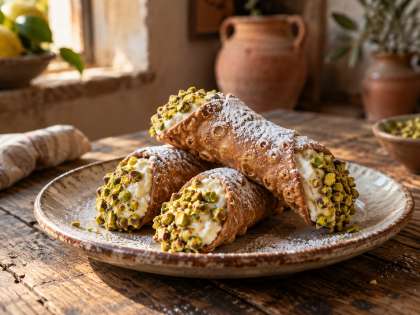 Sweets
Shells you fill at the last minute, in front of your guests — the only way a Sicilian grandmother accepts.
Page 133 in the book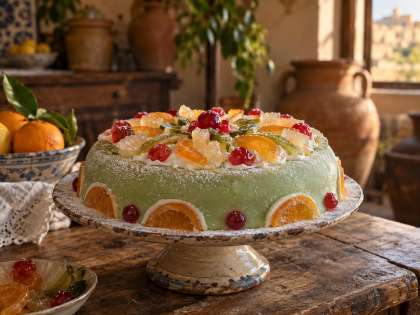 Sweets
Ricotta, sugar, almond paste, candied fruit. Not just cake — eight hundred years on a plate.
Page 138 in the bookSwipe to see more →
Where these recipes come from
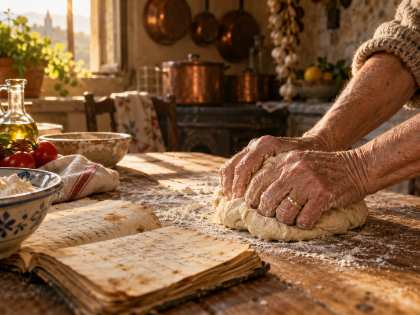
The kitchen in the hills above Cefalù. Same stove, same table, same window.
My grandmother Nonna cooked in the same kitchen her mother cooked in, and her mother before that — a farmhouse in the hills above Cefalù, shutters half-closed against the afternoon until it was cool enough to light the stove. Nine generations. Not one of them ever wrote a recipe down.
She'd shout Manciati! — eat! — before you'd sat down. She measured nothing. When I asked how much vinegar went in the caponata, she said "enough," and when I asked again she took the bottle out of my hand and showed me.
So I sat with her for two summers and wrote everything down. Every "enough." Every "not yet." Every time she said the eggplant has to give up before the tomato goes in. Then I went home and cooked all of them in a kitchen in Ohio, with supermarket ingredients, until each one tasted the way it did at her table.
She's gone now. The kitchen is still there. This book is what she never had time to write — and what I couldn't let disappear with her.
— Sofia
That's why it costs what it costs — and why I'm not going to argue about the price.
Is it for you?
Still reading? Then here's what $29.99 actually buys.
Sicily is a plane ticket away.
Dinner isn't.
The math
Forty a head at the Sicilian place, and you go home still unable to serve it yourself. These are the dishes, with the why and the stories, in your kitchen for good. That's under a dollar a recipe.
The full cookbook, everything included
$29.99
One payment in US dollars. $0.86 per recipe.
Get The Taste of Sicily — $29.99The Taste of Sicily
A recipe blog
Three things people ask before they buy. Honest answers.
Yes, but…
"I'm not a confident cook."
Nonna cooked for eleven people with one stove and no thermometer. Every recipe tells you what you're looking for — the sound, the color, the moment the eggplant gives up — not just a number. You'll know which ones are a weeknight and which are a Sunday before you start.
"Can I even get the ingredients here?"
Yes. Every recipe was cooked again in a normal home kitchen with supermarket ingredients before it went in. Where something's hard to find, her substitution is written beside it — the one she'd have used, not the one that's technically correct.
"I could just search for this online."
You could — and you'd get the version that's been copied nine times and never once cooked by a Sicilian. That's the recipe your guests politely finished. This is the other one.
Questions
Is this a physical book or digital?
Digital. You get it the moment you pay — no shipping, no waiting. Read it on your phone, tablet or laptop, or print the recipe you're making tonight.
Are these really Sicilian recipes, or 'Italian-style'?
Sicilian. We use arancine, following western Sicilian tradition; arancini is widely used in eastern Sicily. Pasta alla Norma the way Catania makes it. Cassata with real almond paste. Nonna would not have recognized the word 'Italian-style'.
How many are quick, and how many take real time?
A mix of quicker dishes and weekend cooking projects. The arancine, the cipolline, the cannoli, the cassata and the Sunday ragù are rewarding projects worth planning a slow afternoon for. Each recipe tells you which before you start.
What if I can't find an ingredient?
Every recipe was re-cooked in a US kitchen before it went in the book. Most ingredients are in a regular supermarket; a few need an Italian deli or specialty shop. For those, her substitution is right there next to it, with a note when the swap changes the result.
Is there anything else to pay?
No. $29.99 gets you the whole book, every recipe and essay, in full. At checkout you'll see an optional $9 hosting guide, Host Like a Sicilian — only if you want it. The book is complete without it.
Sicily is a plane ticket away. Dinner isn't. Your next dinner party could be the one your friends talk about all year — with Nonna's recipes on the table, not the tenth "authentic" one that isn't.
Get The Taste of Sicily — $29.99